
Barbershop Harmony Society presents Black History Month panel discussions
A two-part panel series in February 2026 shines a light on our organization’s history, growth, and commitment to becoming a more inclusive musical community.
These recorded conversations focus on the historical realities of BHS’s past—specifically its legacy of exclusion—and the importance of openly acknowledging and learning from that history. Our goal is to create a thoughtful, honest dialogue that helps our community better understand where we have been, why that history matters, and how it continues to shape our work today. See previous session.
Tension & Release: Moving Forward in Harmony
🗓️ Presented Wednesday, February 25, 2026

Acknowledging history is only the beginning. This second panel turns our attention forward—exploring how the Barbershop Harmony Society can transform learning into sustained action and build a more welcoming future for everyone in harmony.
Drawing on lessons from barbershop’s past and present, panelists will examine how inclusion can become an ongoing practice rather than a one-time conversation. The discussion will explore how BHS can deepen relationships with other musical communities and institutions, cultivate partnerships rooted in mutual respect, and ensure that commitments to inclusion lead to lasting, meaningful change.
Using barbershop’s own musical language, this session will consider how differences in perspective are not obstacles, but opportunities for growth. Panelists will reflect on how historical awareness can strengthen community bonds, how spaces of compassion and understanding can be intentionally cultivated, and where the Society can focus its efforts to make inclusion a lived experience rather than an abstract goal.
Together, this conversation invites members to imagine what it truly means to create a barbershop community that appeals to people from all walks of life—and how, through shared responsibility and continued learning, we can move forward in harmony.
Featured panelists
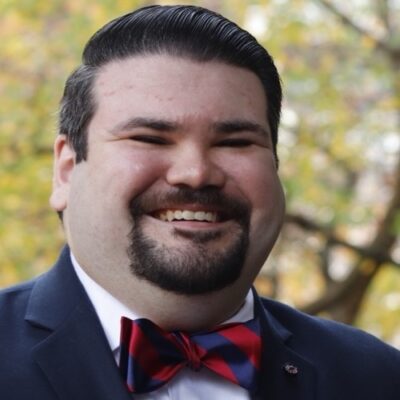
Daniel Carsello, Ph.D. (he/him) - Moderator recently earned his Ph.D. in music from Temple University. He researches and has presented on identity and United States choral, folk, and popular music, including barbershop harmony. He previously served as the director of the University of Pennsylvania Glee Club, guiding the organization through a transition from a TTBB ensemble to an SATB ensemble in 2021, and is currently an adjunct lecturer at Goucher College. Dr. Carsello is also an active barbershopper, arranger, and coach. He currently sings with Parkside Harmony and has been its Chorus Manager since February 2025.
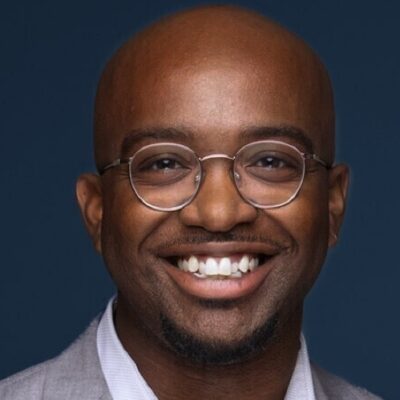
Dexter Evans (he/him) is Deputy Director of Strategy & Advancement at the National Museum of African American Music, where he leads fundraising, marketing, education, and artist engagement. A former saxophonist, drum major, and stage performer, he brings lived musical experience to his work advancing African American music heritage through national partnerships and philanthropy.
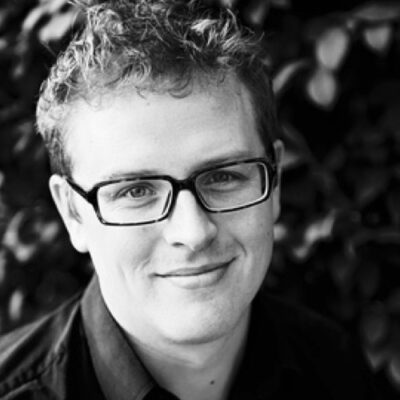
Jesse Lange (he/him) is Director of Choirs at Cleveland Heights High School and an accomplished choral educator and conductor. He directs multiple ensembles, including the Derbytown Chorus and Akron Harmony Project, and has founded award-winning a cappella and choral programs. His work bridges music education, community music-making, and barbershop harmony.
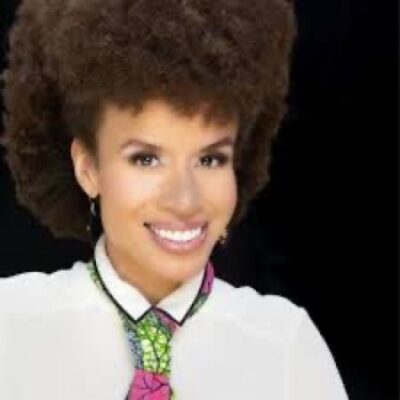
Shana Oshiro (she/her) is a barbershop performer, vocalist, and board-certified music therapist. A former Harmony, Inc. International Harmony Queen with Epic, she co-founded the barbershop quartet HALO, using performance and music therapy to facilitate dialogue around race, healing, and community connection through their Race and #RealTalk initiative.
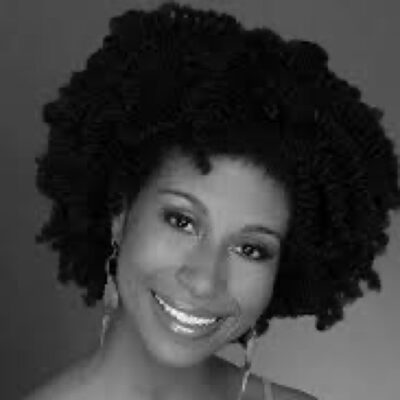
Niambi Powell (she/her) is a vocalist, barbershop singer, and licensed social worker whose work bridges music and community healing. As a member of the quartet HALO, she integrates systems therapy and barbershop harmony to support inclusive conversations around race, equity, and social connection.
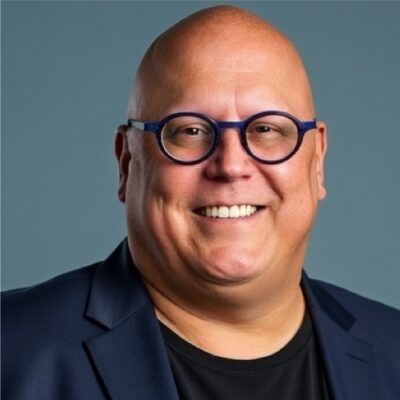
Robert Rund (he/him) is CEO of the Barbershop Harmony Society and a 50-year member of the organization. With more than three decades of arts leadership experience, he is committed to advancing equity, inclusion, and belonging within barbershop harmony while strengthening the Society’s mission, culture, and long-term sustainability.
Toward True Harmony: Learning from a History of Exclusion
🗓️ Presented Wednesday, February 18, 2026

Barbershop harmony has always been rooted in connection—but like many institutions, the Barbershop Harmony Society’s history includes periods of exclusion that continue to shape our present. This panel invites members to engage honestly and thoughtfully with that history, not to assign blame, but to deepen understanding and guide our collective future.
Featuring scholars who have extensively researched barbershop’s origins, cultural influences, and institutional choices, this session explores the experiences of Barbershoppers who were historically excluded and those who challenged segregation from within. Panelists examine how Black and white musical traditions jointly shaped the art form, how false or incomplete narratives took hold, and why full acknowledgment of our past—especially the uncomfortable parts—is essential to building a more welcoming Society today.
Together, we consider how preservation and progress can coexist, how education can support a growing and more inclusive membership, and how current and future Barbershoppers can engage with our history in ways that are constructive, respectful, and honest. The conversation also reflects on the real progress BHS has made—and the opportunities ahead as we continue striving toward true harmony.
Featured Panelists
Daniel Carsello, Ph.D. (he/him)– Moderatorrecently earned his Ph.D. in music from Temple University. He researches and has presented on identity and United States choral, folk, and popular music, including barbershop harmony. He previously served as the director of the University of Pennsylvania Glee Club, guiding the organization through a transition from a TTBB ensemble to an SATB ensemble in 2021, and is currently an adjunct lecturer at Goucher College. Dr. Carsello is also an active barbershopper, arranger, and coach. He currently sings with Parkside Harmony and has been its Chorus Manager since February 2025.
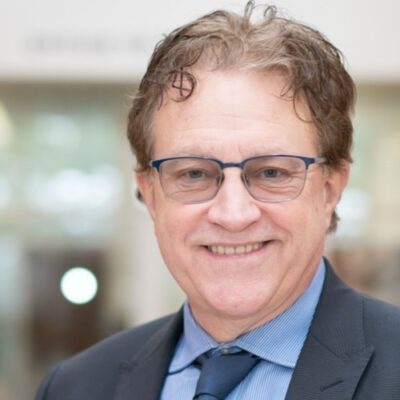
Gage Averill, Ph.D. (he/him) is Provost and Vice-President, Academic at the University of British Columbia Vancouver and a distinguished ethnomusicologist. His award-winning research focuses on Haitian popular music, and he has held senior academic leadership roles at UBC, the University of Toronto, and New York University. Dr. Averill brings deep expertise in music scholarship, institutional leadership, and the social contexts of musical traditions.
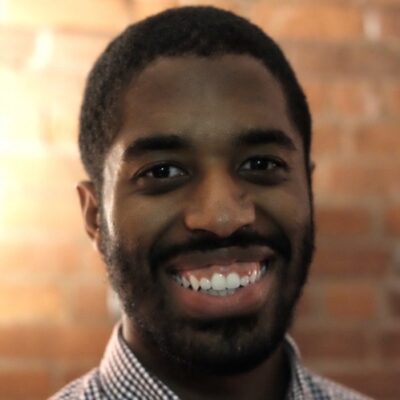
Clifton Boyd, Ph.D. (he/him) is Assistant Professor of Music at New York University and a leading scholar of American barbershop harmony. His book project, Racial Dissonance: American Barbershop Harmony in the Age of Jim Crow, examines how barbershop music intersected with race, identity, and structural racism in the United States. Boyd is also a national leader in equity and inclusion initiatives within music academia, including founding Project Spectrum.
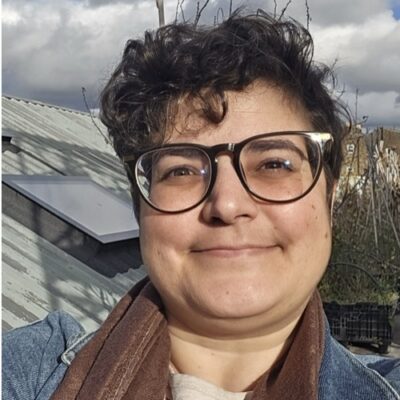
Aurélie Gandour (they/them) is a doctoral researcher at the University of London's School of Oriental and African Studies (SOAS) music department. Their research is concerned with the gendered history of barbershop harmony, and how this history affects the current practice of the style. Aurélie sings with the chorus London City Singers who will make their debut on the international stage this July.
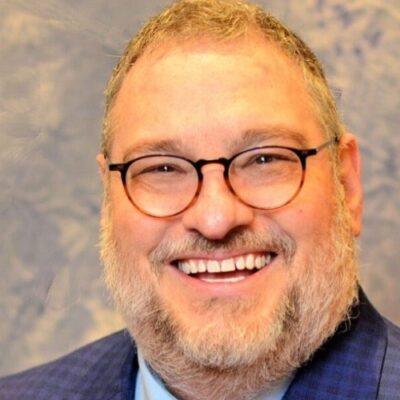
Jim Henry, Ph.D (he/him) is Director of Choral Studies at the University of Missouri–St. Louis and an internationally recognized conductor, composer, and educator. A two-time Barbershop Harmony Society International Quartet Champion and four-time International Chorus Champion director, he currently sings bass with Crossroads and was previously a founding member of Gas House Gang. Dr. Henry is a BHS Hall of Fame inductee and has spent decades teaching, coaching, and advancing barbershop harmony worldwide.
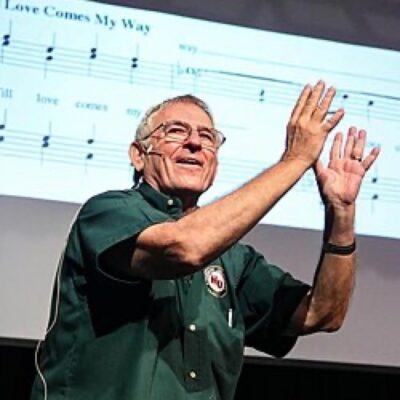
David Wright, Ph.D. (he/him) is a renowned barbershop arranger, historian, educator, and longtime leader within the Barbershop Harmony Society. Since joining BHS in 1976, he has influenced the evolution of barbershop through award-winning arrangements, champion-level coaching, and service as Associate Director of the Ambassadors of Harmony. A passionate historian, Wright has researched and presented on barbershop’s African American roots and helped shape modern BHS music judging and education. He also holds a Ph.D. from Columbia University and is Professor Emeritus of Mathematics at Washington University in St. Louis.
CEO Robert Rund welcomes you to the video series
